Office Clearance in South Kensington

Office clearance in South Kensington needs a careful, orderly approach, especially when workspaces contain mixed furniture, files, equipment and general contents that must be separated correctly. We provide a commercial clearance service focused on removing office items with as little disruption as possible, while keeping attention on sorting, loading and the practical steps that help a workplace return to normal use. The service suits businesses that are relocating, downsizing, refurbishing or simply clearing out surplus items that have built up over time.
Our work can cover individual rooms, shared office areas and larger commercial spaces, with a particular focus on the items that most often cause congestion: desks, chairs, shelving, storage units, cabinets, screens, soft seating, boxed materials and miscellaneous office waste. We also handle mixed clearance tasks where different item types need to be separated, which is often important when a site contains both reusable items and waste that needs to be removed responsibly. For organisations looking to clear office space efficiently, the goal is a straightforward process that keeps the practical side of the move under control.
A sensible starting point is to identify what should stay, what should move elsewhere and what is ready for removal. If you are planning a quotation, it helps to have a clear idea of the areas involved and the main categories of items, even if the list is only approximate at first. Good preparation makes the clearance smoother, but you do not need to overcomplicate it; a simple description of the office layout and contents is usually enough to begin. Request a quotation when you are ready to compare the likely scale of the work.
What an Office Clearance Can Include
Office clearances are rarely limited to a single type of item. One job may involve dismantling a row of workstations and removing storage units, while another may focus on clearing archived paperwork, redundant chairs and old reception furniture. The practical aim is to remove everything agreed, while separating items that may need different handling. When a space is busy, access and sequence matter, so the clearance is usually planned around doorways, lifts, stairwells and the order in which rooms should be emptied.
We also work on areas that are not part of the main desk floor, such as meeting rooms, break areas, server cupboards, storage rooms and back offices. These spaces often contain a mixture of office fixtures and loose contents, so the task is not only about lifting bulky items but also about dealing with smaller pieces that accumulate over time. A clear scope helps make sure the work stays focused and that the right things are removed without unnecessary disturbance to the premises.
For related commercial removals, you may also want to review our business waste removal service if the main concern is mixed workplace waste rather than a fuller clearance. Where the office contents include single items or grouped furniture rather than a complete room, the furniture clearance page gives a useful picture of how standalone pieces can be taken away. In practice, the right option depends on whether you need to empty a workplace, remove selected items or address both at the same time.
Furniture, Fixtures and Loose Contents

Most office clearances involve several layers of material, and the furniture is often only the most visible part. Desks, office chairs, filing cabinets, cupboards, bookcases and meeting tables are common items, but a workplace can also contain lamps, noticeboards, partition pieces, reception fittings and loose accessories that need attention. We approach the work item by item so that the space can be cleared in an orderly way rather than treated as a single bulk load.
Where appropriate, items may be grouped by category to make the process more efficient. For example, freestanding furniture can be separated from lightweight contents, while reusable items can be distinguished from general waste or items that are worn out. This matters because clear categorisation helps the clearance stay practical and avoids confusion when a room contains a mix of hard furniture, packaging, old stock and abandoned office materials. It also helps the work move faster once removal begins.
If your plans involve more than office furniture, the furniture disposal page is relevant where the focus is on getting rid of individual pieces. When the location includes cupboards, archives or built-in storage areas that have been used to pile up miscellaneous items, a wider removal plan may be more suitable. The right approach depends on the shape of the premises and how much sorting is needed before loading starts.
Planning Access and Preparing the Space
Careful preparation can make a noticeable difference to how smoothly an office clearance runs. If the site is active, it helps to identify which areas are available for removal work, which items are definitely included and whether anything needs to remain on the premises. Simple access information is useful too, especially where there are shared entrances, loading restrictions, narrow staircases or lifts that affect how items can be moved. That information allows the job to be organised around the real conditions of the building rather than assumptions.
Two practical points usually make the biggest difference: first, separating anything that should not be taken away; second, making sure someone can confirm the scope on the day if questions arise. A brief room-by-room note is often enough. You do not need to prepare a detailed inventory unless the premises are large or the contents are complex. If photographs are available, they can help, but the main purpose is simply to ensure that the agreed clearance matches the space on site.
For a broader view of how office work can be arranged, our office clearance page reflects the same core service, while the pricing and quotes page is the best place to start when you want a quotation based on scope. If the premises contain a significant amount of general domestic-style contents alongside office items, the home clearance service may also be relevant where a mixed environment needs attention.
Filing, Paperwork and Stored Materials
Office spaces often store more than furniture. Old files, archived records, boxed paperwork, catalogues, packaging and excess promotional materials can build up in cupboards, storerooms and under desks. These items can take time to sort because they are usually mixed with containers, folders and outdated supplies. A good clearance separates what is to be removed from anything that must be retained, while keeping the process tidy enough for the remaining workspace to stay usable.
When a clearance includes paper-heavy areas, there is often a distinction between general contents and material that needs more careful handling. Not every job requires the same level of sorting, but it is useful to think in terms of what is bulky, what is recyclable, and what should be kept secure until it has been checked. That approach suits offices, studios and professional rooms where confidential or archived documents may still be present. It also keeps the work aligned with the actual use of the building rather than treating everything as interchangeable waste.
Some customers also compare office clearance with loft clearance or garage clearance when the issue is stored items in back rooms or upper-level spaces. Those pages may be useful if the office has been used partly as storage and partly as a working environment. The important point is to choose the service that matches the contents, the access and the amount of sorting needed.
Equipment, Electronics and Mixed Contents
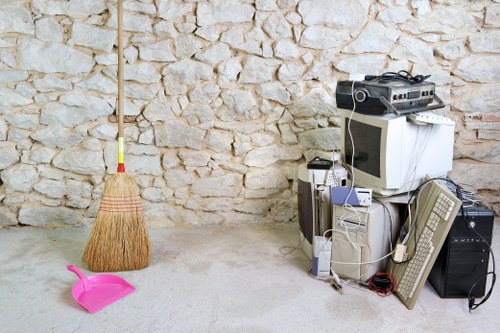
Office clearances frequently involve more than ordinary furniture. Workplaces often contain printers, monitors, desktop accessories, small electrical items, cable runs, docking equipment, spare devices and old presentation gear, all of which can complicate the task if they are left to the end. A thoughtful clearance keeps these items under control by handling them within the broader plan for the room. That means fewer interruptions and a better chance of clearing the space in a logical order.
The same applies to mixed contents that are not quite waste but are no longer needed in day-to-day work. Examples might include stationery, unused stock, sample materials, display items and surplus meeting-room pieces. These can accumulate in ways that make them hard to ignore but awkward to move. When handled together, rather than as unrelated single objects, they are easier to assess and remove from the premises. Mixed office contents need the same clear plan as the larger items around them.
For businesses managing more general waste alongside office contents, waste removal may be a useful complementary page. If the premises include heavy back-room accumulation rather than standard workplace contents, the builders waste clearance page can be helpful where the material is more like mixed heavy debris than office furniture. Choosing the right route depends on what the space actually contains and how the items are grouped.
Commercial Areas We Regularly Clear
Office clearance is not just about rows of desks. Many commercial properties include reception areas, small meeting rooms, shared desks, storage cupboards, kitchenettes, interview rooms, records rooms and compact back offices that need to be cleared in different ways. Each space has its own mix of fixtures and contents, so the work needs to adapt rather than follow one rigid pattern. The most useful clearances are those that respect the way the building is actually used.
Where a property has several zones, the sequence can matter as much as the total amount of material. Clearing the least active rooms first may create space for sorting from the busier areas, while larger items may need to come out before boxed contents can be moved safely. That is why an office clearance is usually more effective when the job is broken into practical sections rather than treated as one undifferentiated pile. It is a simple method, but it keeps the work structured.
If you are comparing services, the flat clearance page may be useful for compact premises with a domestic feel, while house clearance may suit a mixed-use property where the contents are closer to household belongings than office stock. For a workplace-only job, though, office clearance remains the most direct match. Matching the service to the contents is often the easiest way to keep the quotation accurate.
About South Kensington
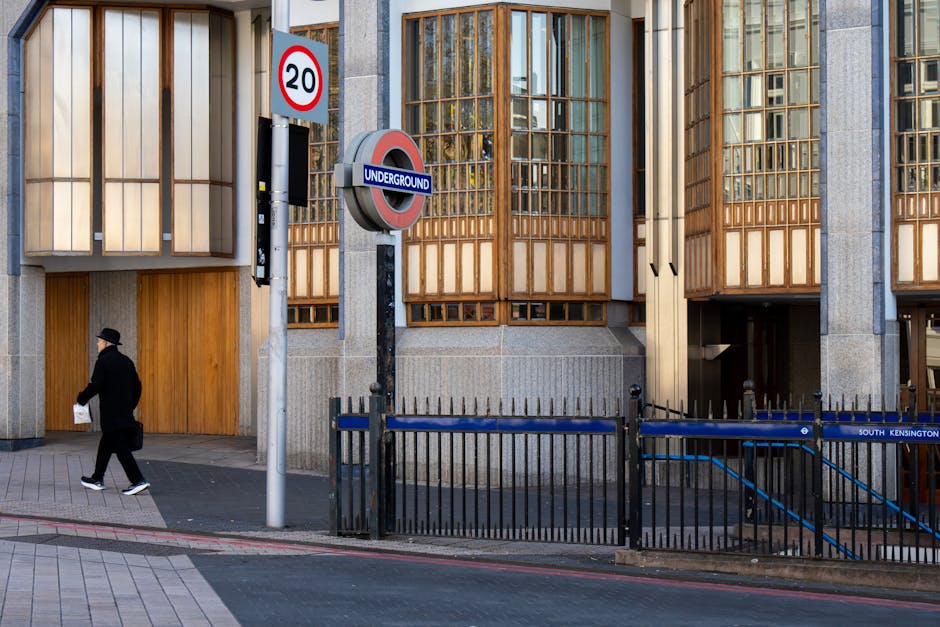
South Kensington is a district in west London known for its museum quarter, garden squares and strong association with nineteenth-century development. The area grew significantly after the Great Exhibition of 1851, when land in this part of Kensington was transformed into a planned urban neighbourhood with cultural institutions and substantial residential streets. Today its character is shaped by a blend of elegant terraces, embassies, educational buildings and museum landmarks, creating a streetscape that feels formal yet lively. The area is also closely connected with the Royal Borough of Kensington and Chelsea, though parts of the wider district stretch towards neighbouring borough boundaries and transport links. Exhibition Road forms one of its best-known corridors, linking major institutions in a relatively compact route that brings heavy pedestrian movement to the district. The nearby Natural History Museum, Science Museum and Victoria and Albert Museum give the area an international profile, while smaller streets contain cafés, specialist shops and residential squares that soften the grander architecture. South Kensington underground station is a key transport hub and helps shape the rhythm of local movement, particularly around Cromwell Road and the museum entrances. Across the area, the mix of red-brick terraces, stucco frontages and institutional buildings reflects successive phases of planning and refinement, and the overall effect is one of layered urban history rather than a single architectural period. Parks and private garden squares contribute greenery within a densely built setting, while the wider neighbourhood connects easily to Kensington Gardens and Hyde Park. Cultural life remains a defining feature, with exhibitions, collections and academic activity continuing to influence the area’s identity alongside residential life and everyday commerce.
Clearance for Moves, Refits and Reductions

Many office clearances happen because a business is changing rather than closing. A move to another site may require partial removal before handover, while a refurbishment may need the existing furniture and loose contents taken out to create a blank interior for contractors. In other cases, the goal is simply to reduce overcrowding and remove material that no longer serves the workplace. The process is similar in each case, but the emphasis changes depending on whether the space is being handed back, redesigned or reorganised.
Where a business is retaining part of its operation on site, a selective approach is often the most practical. Essential desks, screens, storage and active equipment can stay in place while surplus items are removed from the areas being emptied. This makes it easier to keep business continuity in view and avoids turning the clearance into unnecessary disruption. It also means the remaining rooms can be left in a clearer condition for ongoing use, staged refurbishment or final inspection.
For offices that also need help with related storage rooms, the garage clearance page may be a useful reference when the space is being used in a similar back-of-house way. If the building contains furniture that needs removal as part of a wider reset, the furniture clearance page gives an idea of how separate pieces can be addressed without turning the job into a full-scale premises clearance.
Quotation Factors and Service Options
Office clearance quotes usually depend on a small number of practical factors rather than vague estimates. The main considerations are the volume and type of items, the number of rooms involved, the ease of access and whether the clearance includes bulky furniture, storage material or mixed contents that need sorting. If certain areas are hard to reach or if the premises have shared access points, those details can affect the time needed to complete the job. A straightforward description helps make the quotation realistic from the outset.
There are also differences between a simple item removal and a fuller office clearance. Taking away a few chairs or desks is one thing; clearing multiple rooms with cupboards, archived materials and leftover fittings is another. That is why it is useful to describe the work in terms of spaces and contents, not just in broad general terms. If the job includes more than one category of material, say so clearly. Clear scope produces clearer pricing, and it helps avoid confusion later in the process.
To discuss likely costs in more detail, the pricing and quotes page is the most relevant next step. If you are comparing services before making a decision, our about us page may also help you understand the wider company focus, while this page remains centred on office clearance in South Kensington and the practical removal of workplace contents.
Choosing the Right Clearance Scope

The best office clearance is the one that matches the site rather than forcing the site to match the service. A small professional suite may only need selected furniture and loose contents taken away, while a larger office floor could require multiple stages of removal across several rooms. Some customers want a full clearance before handover; others need a partial service that leaves working areas intact. We adjust the work to the scope you set, keeping the removal focused on the agreed items.
It is also worth thinking about whether the job is mostly about furniture, mixed contents or a full room-emptying exercise. That distinction shapes the logistics and the time needed on site. If the office contains reusable pieces, compact stock, archived materials and redundant equipment all in one place, a careful order of operations matters more than raw speed. The most efficient clearances are often the ones where the contents have been considered in advance, even briefly, so the team can work without stopping to redefine the task midway through.
When you are ready to move forward, send the details of the space and ask for a quotation. If the office is ready for removal, or if you are still comparing the scope of work, a short enquiry is enough to begin. A clear description of the rooms, the furniture and any access limits will help us respond sensibly, and if you would like to compare service pages first, you can do that before making your decision.